Saturday, 10 October 2020
INSCRIBED POLYGONS
- Equilateral triangle given the circumcircle:
- Square given the circumcircle:
- Regular pentagon given the circumcircle:
- Regular hexagon given the circumcircle:

Monday, 28 September 2020
Saturday, 26 September 2020
OPERATIONS WITH LINE SEGMENTS AND ANGLES
These are the links to two slideshare presentations about operations with angles and line segments.
https://es.slideshare.net/Cnavarrovargas/line-segment-operations
https://es.slideshare.net/Cnavarrovargas/operations-with-angles
Tuesday, 5 May 2020
Some Artists
Here you go, some artists that you should know (click on the name to get information from Wikipedia):


Vamos de museos
Aquí tenéis varios enlaces que os llevarán a visitar algunos de los principales museos de pintura (¡solo algunos de los muchos!):
- Tres horas en el Museo del Prado. Selección de 54 obras.
- Visita virtual a la colección permanente del Museo Thyssen-Bornemisza.
- Visita virtual al Teatro-museo de Salvador Dalí.
- Paseo por el Museo Picasso de Barcelona.
- Principales obras de Vincent Van Gogh, y su biografía, en el Museo Van Gogh de Amsterdam.
- 24 obras de arte del Museo del Louvre en París.
- Visita virtual al Museo Sorolla de Madrid.
- Las 10 IMPERDIBLES obras del Museo D’Orsay en París.
- El Museo Metropolitano de Nueva York, en una visita pensada especialmente para los más jóvenes.
Sunday, 3 May 2020
COMIC STRIP. Task from the 4th of May
As explained in the power point presentation, (this is the link) the next task consists on creating a comic strip. We are going to make a comic based on a famous artist or their artworks.
- Choose an artwork or an artist and imagine a short scene. For example, something that happened in Van Gogh’s bedroom, or within the living room where the “infanta” Margarita was posing with the “meninas” for Velázquez, or the story behind the vase of sunflowers, or why those watches are so floppy in Dali’s painting…
- Develop that short story, joke, thought or situation in a comic strip.
- On a blank piece of paper, draw a comic strip with at least three frames.
- It has to have balloons, and at least one caption and an onomatopoeia. And, of course, your chosen artwork or artist has to appear in some way.
- You have to use at least one angle that is not a neutral view or eye level angle.
- You can use any materials that you have around. It can be black and white or coloured, with watercolours, or pencils, or markers, or crayons, or collage…
1st week (4th-8th of May)
- 1st day: Read the theory of the presentation
- 2nd day: Search for an artist or artwork you would like to work on. During the week I'll add a post on the blog with information about several artists, but you can choose other ones if you prefer it.
- At the end of the week I want you to send me an email telling me which artist/artwork you are going to do your comic strip about and what the plot is going to be. IN ENGLISH. If you need help or inspiration let me know.
This week can be used as well to finish or correct the previous works.
2nd week (11th-14th of May)
- Make a sketch of the comic strip on a piece of paper or in your sketchbook. It doesn't have to be the final work, but a sketch by pencil where I can appreciate the shots, angles, balloons, caption and onomatopeia that you are using. Send me a picture of the sketch at the end of the week, adding a title.
3rd week (18th-22nd of May)
- Finish the comic strip, with the technique that you prefer. Obviously, ask me any questions that you have while drawing it. Send me a picture of your final work by your first day of class of the following week (26th, 27th or 28th, depending on your group).
Monday, 13 April 2020
14 to 30 April: BOARD GAMES and POLYGONS
TAREA
EPVA del 14.4 al 30.4
Diseño de un juego de mesa aplicando la construcción de
polígonos
Durante
estas tres semanas (son cinco o seis días de clases, según los grupos) vamos a
estudiar la construcción de algunos polígonos y a aplicarlo al diseño de un
juego de mesa.
En el blog
de la asignatura tenéis varias entradas donde podéis encontrar las
explicaciones. Os digo los pasos que debéis seguir:
1. LEER DEFINICIONES: En esta entrada del blog de la asignatura vais a encontrar las diferentes definiciones de los polígonos que tenemos que estudiar. Son los triángulos (y los diferentes tipos según sus lados y sus ángulos), los cuadriláteros, el pentágono y el hexágono. http://theweesketchbook.blogspot.com/2020/04/polygons.html
2. MIRAR CONSTRUCCIONES: En esta otra entrada del blog vais a encontrar las explicaciones de cómo se construyen diferentes polígonos según los datos que tengamos:
Fijaos que en la parte inferior de la página de cada construcción tenéis
unas flechas para ir avanzando en la construcción de cada polígono. Si lo veis
en una pantalla táctil, tened cuidado al agrandar la página porque si tocáis
dentro del marco de la construcción podéis estar moviendo también el polígono.
Todas estas construcciones están hechas con Geogebra (es un software
matemático interactivo libre), y podéis encontrarlas también en mi página de
esta aplicación:
De estos dos puntos anteriores no tenéis que entregarme nada, solo pensar en qué polígonos vais a utilizar para las tareas que explico en el punto 3 y 4. La primera tarea que tenéis que entregarme es la del boceto y el texto. Y después la del tablero acabado.
3. BOCETO Y EXPLICACIONES: A continuación
vais a diseñar el tablero de un juego de mesa, inventado por vosotros, en el
que haya alguno o algunos de los polígonos que habéis estudiado. Primero tenéis
que dibujar un boceto del tablero, en vuestro cuaderno de bocetos o una hoja en
blanco, a mano alzada, y añadir una explicación (en inglés) de los
polígonos que habéis utilizado y de cómo los vais a construir. Indicad también
las reglas del juego, y si queréis podéis dibujar también el boceto de otras
piezas que vayáis a necesitar. El boceto (una foto) y la explicación (en un
documento de Word, pdf o similar, o en el mismo cuerpo del mensaje) me lo
enviáis en un mismo email a theweesketchbook@hotmail.com


Aquí tenéis un ejemplo de lo que tenéis que hacer:


4. DISEÑO FINAL: Este es el momento de
convertir vuestro boceto en un tablero de juego real. Para eso podéis utilizar
el material y la técnica que queráis y que tengáis por casa (cartón, cartulina,
papel, tela, acuarela, lapiceros, rotuladores, collage,…). Usad las reglas y el compás para dibujar los polígonos. Cuando esté acabado
haced una fotografía y enviádmela a theweesketchbook@hotmail.com
En esta entrada del blog tenéis muchos ejemplos de juegos de mesa
clásicos en cuyos tableros aparecen polígonos:
PLAZOS DE
ENTREGA
- Antes del 24 de abril tenéis que enviarme el boceto de vuestro juego de mesa y las explicaciones
en inglés (punto 3).
- Durante
todos los días anteriores tenéis también que leer o repasar la teoría
(puntos 1 y 2). Si tenéis alguna duda sobre las construcciones, o sobre
vuestros bocetos o vuestros textos, preguntadme en theweesketchbook@hotmail.com .
- Antes del 30 de abril me tenéis que enviar el trabajo final acabado o en proceso.
Puede ser que no os haya dado tiempo a terminarlo para entonces porque la
técnica que habéis escogido es más laboriosa o porque queréis incluir
construcciones más complicadas. En cualquier caso, enviadme para entonces una
foto de cómo va vuestro trabajo.
CALIFICACIÓN
de la tarea
El trabajo
final será calificado como una tarea más de las que hemos realizado en el aula.
La
explicación del proceso de trabajo, en este caso de los polígonos empleados y
su construcción, será calificado dentro del 20% de la nota final que valora los
trabajos teóricos, en los que también se demuestra el conocimiento y uso
correcto de la terminología propia de esta asignatura.
Aprovecho
para felicitaros a todos por vuestros trabajos de las técnicas de sombreado y vuestros
carteles. ¡ENHORABUENA y mucho ánimo!
Preguntadme
todas las dudas que os vayan surgiendo sobre esta nueva tarea en theweesketchbook@hotmail.com


POLYGONS
What is a polygon?
A polygon is a flat or plane, two-dimensional closed shape with straight sides. The point at which two sides of a polygon meet is called VERTEX.
The word polygon derives from the Greek adjective πολύς (polús) "much", "many" and γωνία (gōnía) "angle".

A polygon is a flat or plane, two-dimensional closed shape with straight sides. The point at which two sides of a polygon meet is called VERTEX.
The word polygon derives from the Greek adjective πολύς (polús) "much", "many" and γωνία (gōnía) "angle".

A regular polygon is a polygon whose sides and angles are equal.
They are polygons with three sides and three angles. The regular triangle is the equilateral triangle.

QUADRILATERALS
They are polygons with four sides and four angles. The regular quadrilateral is the square.
They are polygons with four sides and four angles. The regular quadrilateral is the square.
Types of quadrilaterals

PENTAGON
The pentagon is a polygon with five sides and five angles. The regular pentagon has all the sides and all the angles equal.

HEXAGON
The hexagon is a polygon with six sides and six angles. The regular hexagon has all the sides and all the angles equal.

Sunday, 12 April 2020
Construcción de triángulos, cuadriláteros y hexágono regular
TRIANGLES
REGULAR HEXAGON
- Equilateral triangle given one side:
- Isosceles triangle given the three sides:
- Triangle given the sides a=6, b=4.5 and c=3 cm.
https://www.geogebra.org/m/jebkvhpx
- Triangle given one side a= 7cm and two angles C=30º and B=45º
- Right triangle given the two legs b= 3 cm and c= 5 cm
- Draw a square given the side.
- Draw a rectangle given two sides.
- Draw a quadrilateral given two sides and the diagonal.
REGULAR HEXAGON
- Draw a regular hexagon given the circumcircle or circumscribed circle. (A circumference, going through vertices of a polygon , is called a circumcircle around a polygon).
Wednesday, 25 March 2020
New Task (26.3-2-4) MOTIVATIONAL POSTER. Activity
You have to create a motivational poster related to the current
situation. It can be a poster addressed to your friends, or to your family, or
to the people who are ill, or to the people who are working outside their
homes, or to the people living alone, …
You can use the technique that you prefer (pencils, markers,
crayons, collage…) but, obviously, USE ONLY MATERIALS THAT YOU HAVE AT
HOME.
Do it on any surface. You can use a piece of paper, cardboard or
any recycled material (a piece of cardboard from a cereals box, for example,
can work great!)
Choose the size and shape that you prefer. It can be a
rectangle (horizontal or vertical) or it can be a square or a circle…
You have EXPLANATIONS about what a poster is (and what a motivational
poster is) and several examples on our blog https://theweesketchbook.blogspot.com/
Write me an
email to theweesketchbook@hotmail.com if you have any questions, and send there
your final works before the 2nd April.
SEND THERE A PICTURE OF THE FIRST TASK (SHADING TECHNIQUES) AS WELL, if
you have not done it yet (before the 2nd April).
Esta tarea será calificada como una trabajo práctico más del curso, y conforme a los criterios de calificación de la asignatura.
Esta tarea será calificada como una trabajo práctico más del curso, y conforme a los criterios de calificación de la asignatura.
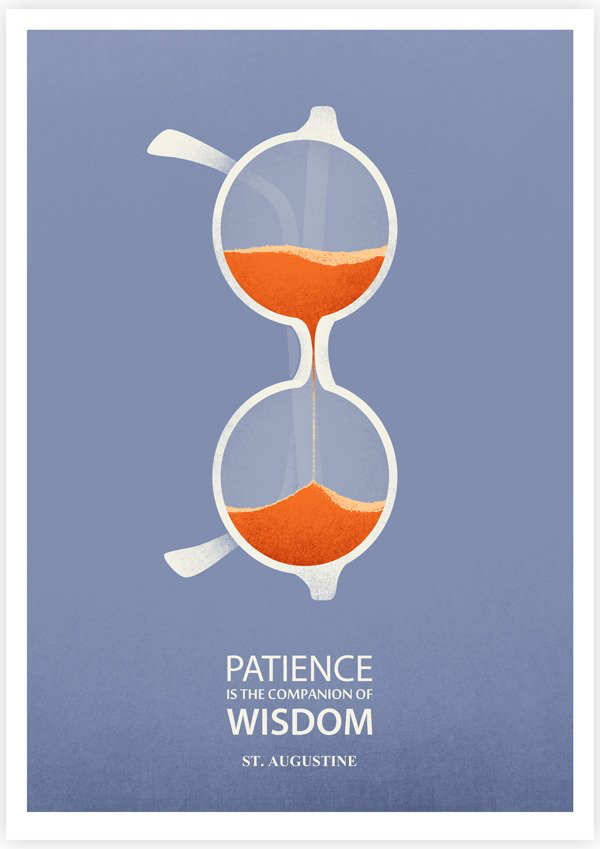
New task (26.3-2.4) MOTIVATIONAL POSTER. Explanation
WHAT IS A POSTER?
A poster is
a printed way of communication, designed to be displayed in public places and read
quickly. Its function is to inform, tell or transmit a message.
Posters are
designed to be both eye-catching and informative.
PARTS OF A
POSTER
Typically,
posters include both textual and graphic elements, although a poster may be
either wholly graphical or wholly text. For this task we are going to use
both elements.
TYPES OF
POSTERS
Posters may
be used for many purposes: commercial, social, motivational, educational…
WHAT IS A
MOTIVATIONAL POSTER?
It is a
type a poster that displays a message that tries to encourage, motivate, make
people go ahead or think in another way.
Create your
own motivational poster related to the situation that we are living nowadays, in
order to send a message to whom you choose.
IN THE
POSTS BELOW YOU CAN FIND SEVERAL EXAMPLES OF MOTIVATIONAL POSTERS, CREATED IN
OTHER SITUATIONS









Subscribe to:
Posts (Atom)
-
Shading is the proce ss of depicting a range of darkness t o create the illusion of volume and light in a drawing. In order to obtain ...
-
 What is a polygon? A polygon is a flat or plane, two-dimensional closed shape with straight sides. The point at which two sides of a p...
 -
Este es el pdf de la resolución de 22 de febrero de 2018 de la Secretaría de Estado de Educación, Formación Profesional y Universidades por...
